
"as opposed to rabbi"
146000 article(s) found

The characteristics of Arabica beans eat expired Arabica coffee beans, okay?
Is it good to eat expired Arabica coffee beans? It's hard to say. It depends on the situation. 1. Moldy Arabica coffee beans it doesn't matter if you eat moldy Arabica coffee beans. You just have to stay in the hospital for ten or eight days. 2. the shell of Arabica coffee beans is white if the shell is white.

The relationship between Kenyan coffee and Arabica coffee beans
Arabica coffee accounts for about 65% and 80% of the world's coffee beans, and its excellent flavor and aroma make it the only coffee among these native species that can be drunk directly and alone. However, its resistance to drying, frost, diseases and insect pests is low, especially to the biggest natural enemy of coffee, leaf rust, so all producing countries are committed to improving varieties. For example, the well-known Sri

Introduction to basic knowledge of boutique coffee Arabica beans
East Timor Arabica beans are mellow and fruity, with a certain irritation in the mouth, miscellaneous taste in the mouth and dry fragrance after grinding.

Flavor description of Brazilian Arabica Bourbon Coffee Bean
Arabica Bourbon Coffee Bean Flavor description treatment Arabica intraspecific Hybridization 1. New World (Mundo Novo): a natural hybrid of Bourbon and Sumatra iron pickup, first found in Brazil, is regarded as the new hope of the Brazilian coffee industry, so it is named the New World species. two。 Catuai: a hybrid of New World and Kaddura, bearing solid fruit

Arabica and Robusta hybrid coffee bean varieties
1. Timo: A hybrid of Arabica and Ba and Robasta found in East Timor. 2. Catimor: Major variety of commercial bean, East Timor, colonized by Portugal for 400 years. Brazilian bourbon variety Catimor was transplanted to East Timor by Portuguese in 1959. Mixed with Timo, coffee from 1970 to 1990

Arabica coffee beans rise vigorously on Wednesday and slip on Thursday.
The US ICE Arabica coffee beans closed at $1.351 a pound on Wednesday, rising 4.2% the day before yesterday, the highest in more than three months, due to the foundation of technical analysis. But by Thursday, the technology strength factor had failed, and it slipped to $1.3455, down 0.41%. (instant for industry and commerce)
Arabica acidity is higher than Robusta acidity.
1. Arabica acidity is high, Robusta acidity is low; 2. Wash beans acidity is high and sun beans acidity is low; 3. Light baking acidity is high and deep baking acidity is low; 4. High acidity does not mean bright and low acidity does not mean dull; 5. Fast baking acidity is relatively bright, but improper control will cause sharp acid; Slow baking acidity is relatively soft, but improper control will cause dull; 6. High water temperature production, acidity is relatively bright,
What are Arabica coffee beans?
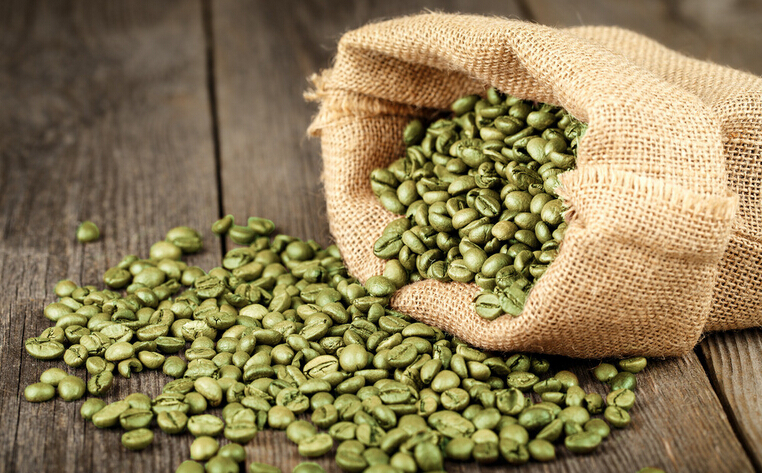
What is Arabica coffee beans? Arabica coffee beans are also one of the coffee beans, but account for 70% and 80% of coffee bean production. It can be seen that Arabica coffee beans are the main source of raw materials for coffee. So what is Arakabi? What kind of nutrition does it have? What's the use? How does it make coffee? What if you eat expired Arabica coffee beans?
Java coffee Arabica coffee
Java coffee is produced on the Indonesian island of Java and belongs to Arabica coffee. After baking, the bitter taste is extremely strong and the aroma is very light, without sour taste. The bitterness and mellowness of Java coffee, coupled with the sweetness of chocolate syrup, make Java coffee more mellow and palatable and very popular with women! Does the main raw material of Java coffee cocoa beans contain preservatives? is it suitable for women?
Description of planting area and Flavor of Arabica Coffee beans in Sumatra
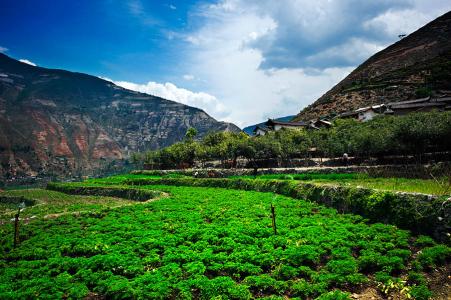
The planting area and flavor of Arabica coffee beans in Sumatra describes that Arabica coffee is difficult to grow. They like mild days and colder nights, and a climate that is too cold, too hot, and too humid can be fatal. Coffee trees in Arabica need to be planted on sloping slopes at high altitude. they grow luxuriantly in the highlands (600-1800 meters).

What are Arabica coffee beans with high-quality aroma and sour taste
What are Arabica coffee beans? It is also one of the coffee beans, but it is also an important kind of commercial coffee, and its most obvious feature is its high-quality aroma and sour taste. Secondly, Arabica coffee beans are mainly produced in South America (except parts of Argentina and Brazil), Central America and Africa (Kenya, Ethiopia and other places, mainly East African countries).

Basic knowledge of boutique coffee beans Arabica beans
East Timor Arabica beans are mellow and fruity, with a certain irritation in the mouth, miscellaneous taste in the mouth and dry fragrance after grinding.

Boutique coffee beans Arabica beans
East Timor Arabica beans are mellow and fruity, with a certain irritation in the mouth, miscellaneous taste in the mouth and dry fragrance after grinding.
Comparison of coffee beans between Arabica coffee beans and Robusta coffee beans
The appearance of Arabica coffee beans is quite obvious compared with that of Robusta coffee beans. Arabica coffee is long, flat, complete and greenish; robusta coffee is round, thicker and whiter. However, it may be because the degree of baking is also different, so this difference alone is not objective.
Introduction of Arabica beans characteristics of Arabica beans
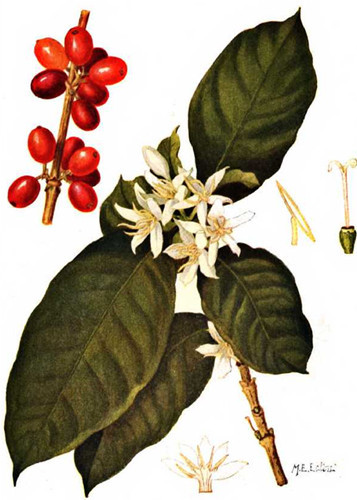
Arabica beans are an important kind of commercial coffee with a period of less than three years and have high-quality aroma and sour taste. Arabica coffee beans are mainly produced in South America (except parts of Argentina and Brazil), Central America, Africa (Kenya, Ethiopia, mainly East African countries), Asia (Indonesia, Yemen, India, Papua New Guinea).

Arabica Fine Coffee beans introduce the taste of Arabica coffee beans
Arabica beans are an important kind of commercial coffee with a period of less than three years and have high-quality aroma and sour taste. Arabica coffee beans are mainly produced in South America (except parts of Argentina and Brazil), Central America, Africa (Kenya, Ethiopia, mainly East African countries), Asia (Indonesia, Yemen, India, Papua New Guinea).

Differences between Arabica coffee beans and bourbon coffee beans
The well-known Arabica species (the main force of boutique coffee) and Robasta species (slightly rough flavor, more suitable for commercial use), Arabica was first identified in 1735 by the Swedish botanist Linnai, more than 100 years earlier than Robasta. There are 2, 000 to 3, 000 varieties under Arabica, all from the oldest iron pickup (Typica) in Ethiopia (the birthplace of coffee).

Can the efficacy of Arabica coffee beans make you feel good?
What are the benefits of Arabica coffee beans? Its most remarkable effect is that it can help people pick themselves up and improve work efficiency. But in addition, Arabica coffee beans have other effects, as follows: 1, can make the mood happy. Experiments show that the average person absorbs 300 milligrams of caffeine a day, which has a good effect on a person's alertness and mood. 2. Relieving stool
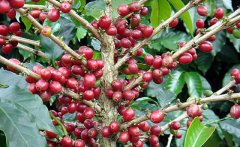
Fine coffee Arabica grows coffee beans
Arabica beans account for 70% of the world's output. The world-famous Blue Mountain Coffee and Mocha Coffee are almost all Arabica species. The other is the Robasta species, which is native to the Congo in Africa and accounts for about 20% to 30% of the world's output. Different varieties of coffee beans have different tastes, but even the same variety of coffee trees, due to different

What's the difference between Arabica and Robusta coffee?
Arabica coffee has a varied and broad potential flavor. Arabica coffee produced in different regions, different elevations and different climates usually has its own characteristics and can show a completely different flavor. "Arabica" coffee smells like grass when it is not roasted. After proper roasting, it shows a "fruity" aroma.